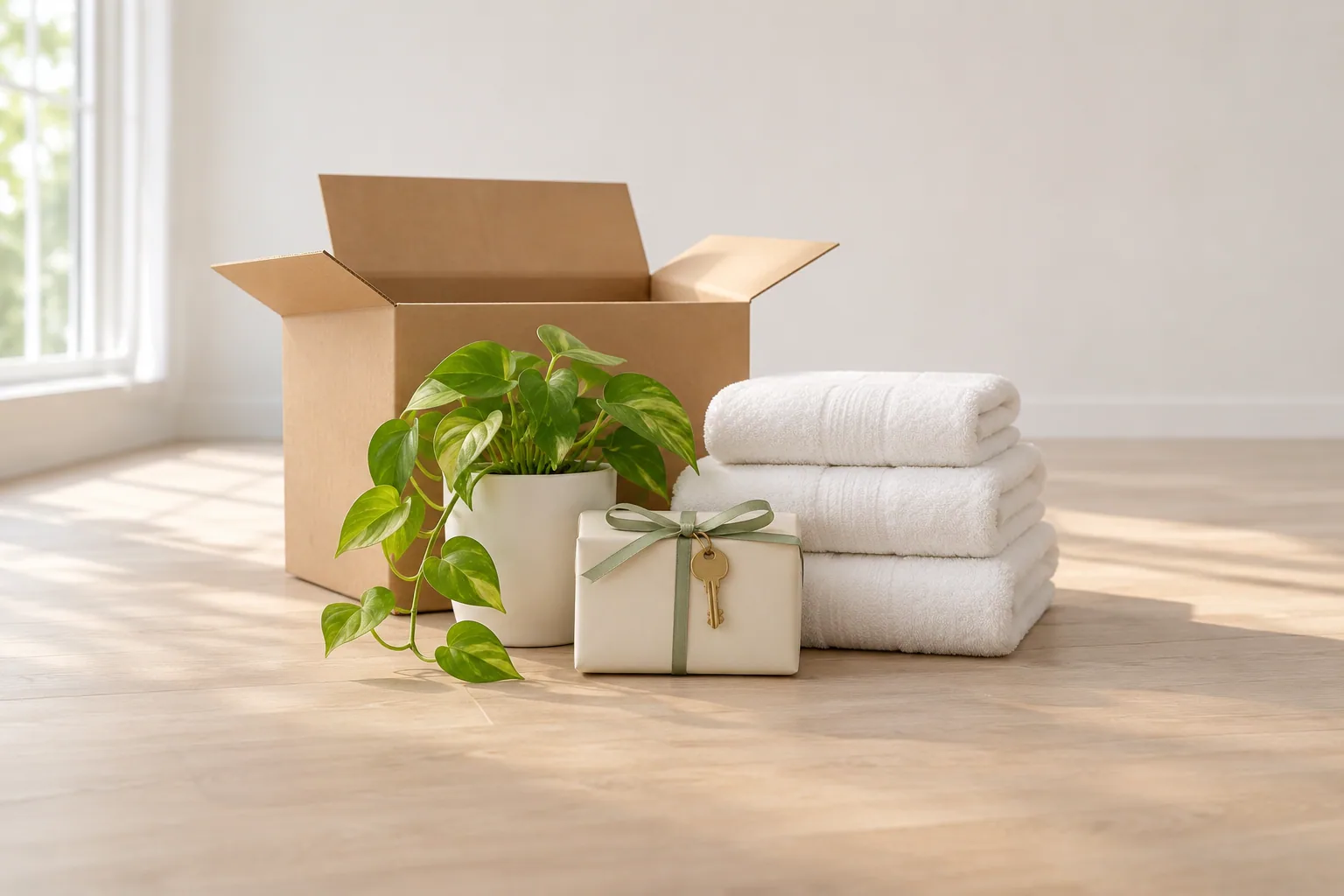
Someone moving into their first apartment looks like the easiest person in the world to shop for. They need everything. Pick anything.
It doesn't go that way. They have a small space, a tight budget, and a secondhand couch that sets the style for the whole place. Half of what well-meaning people give them is either duplicated, too big, or something they'll politely keep in a closet for four years.
Here's how to buy for them without adding to the pile.
Buy what they'll use the first week
The first week in a new place is a list of small emergencies. There's no shower curtain. There's nothing to open a bottle with. Nobody owns a screwdriver, and the shelf is still in the box.
Gifts that solve those emergencies get used immediately, which is the best thing a gift can do:
- A decent chef's knife and a cutting board. Most first kitchens have a steak knife and a dream.
- A basic tool kit with a hammer, a screwdriver set, a tape measure and a level. It's the least glamorous gift on the list and the one they'll thank you for the most.
- A power strip with surge protection, and a long extension cord. Outlets are never where the furniture is.
- Good towels and a set of sheets that fit their actual bed size. Ask the size. Don't guess.
- A shower curtain, a bath mat, a plunger. Funny to wrap, and they'll need all three.
Buy one nice thing, not ten basic ones
A first apartment is full of cheap versions of everything. The thing that changes how the place feels is usually one object that isn't cheap: a cast iron pan, a good lamp, a real mixing bowl, a quality throw blanket.
If you're pooling money with others, this is where it goes. Ten people each buying a $15 gadget gets them ten gadgets. Ten people putting in toward one $150 item gets them the thing they'd never buy for themselves.
Respect the square footage
Before you buy anything with a footprint, think about where it would live. Air fryers, stand mixers, and big decorative pieces are lovely and frequently have nowhere to go in a studio.
Things that fold, stack, nest or hang do well: a collapsible drying rack, nesting mixing bowls, wall hooks, a slim rolling cart. A gift that helps the place hold more is worth more than one that takes up room.
Skip the novelty
Skip the gadget that does one job (an avocado slicer, a banana hanger) and the decorative object they'd have to display to be polite. They're still working out what their place looks like. Give them tools and let them decide the rest.
Plants are the exception, with one condition: ask about light first. A plant for a windowless bedroom is a short-term gift.
Gift cards: fine, if they're the right kind
For the stuff nobody can predict, like the fourth lamp or the rug that turns out to be the wrong size, a gift card to somewhere that sells home goods is genuinely useful. A generic card is a shrug. A card to the store they already said they were browsing is not.
If you're the one moving
Your relatives will ask what you need, and "I don't know, everything" helps nobody. A few things make it easier.
Start the list before you move, and add to it as you notice gaps. You'll find out what's missing on day three, when you can't hang a picture. A list you add to as you go beats a guess made while packing boxes.
Put a range of prices on it. Small things for people who want to spend $10, a few mid-range items, and one or two bigger ones that a group can split. Our post on what to put on a wishlist goes into why that spread works.
Add the details, like the size of the bed or the color you want, in the item notes so nobody has to ask.
Then send it as a plain link. In iFancy, a public list opens in any browser with no account, unless your profile is private, so it works for the aunt who has never installed an app. How to share a wishlist walks through sending it, and the help center's list visibility article covers who can open what. Seeing what's already been bought takes a free account, so it's worth telling the people who are buying that they'll want to sign in. That's what keeps you from ending up with three toasters.
The short version
Buy for the first week, not the first year. Choose one good thing over several forgettable ones. Check the space before you check out. And if they've made a list, buy from it.